What is Fleet Leasing? Meaning, Benefits, and More

Updated 7/21/2026
Fleet leasing is a strategic approach to managing business vehicles. It involves leasing a group of vehicles for an established term. This method offers flexibility and reduces the financial burden of ownership.
Businesses can upgrade their fleet without large upfront costs. Leasing agreements often i offer maintenance and fuel card programs, simplifying fleet management.
Understanding fleet leasing is crucial for optimizing vehicle use and cutting operational costs. It allows access to the latest automotive technologies without hefty investments. It also aids in managing cash flow by spreading costs over time.
Understanding the Basics
Fleet leasing involves leasing a group of vehicles for business purposes, avoiding the financial load of purchasing vehicles outright. Leasing offers flexibility and access to a wide range of vehicle types.
Leasing agreements can be tailored to fit specific business needs. They often include options for mileage estimates, maintenance programs, and fuel card solutions. This customization enhances the overall value of the fleet leasing experience.
Who Benefits Most from Fleet Vehicle Leasing?
Fleet leasing isn’t one-size-fits-all, but it tends to be a strong fit for businesses that need reliable vehicles without the overhead of ownership. Any growing business will appreciate the ability to scale the fleet up or down without being locked into assets.
If your business has variable mileage needs, limited capital, or simply wants to stay focused on operations rather than vehicle management, fleet leasing is likely worth serious consideration.
Types of Fleet Leasing: Open-End vs. Closed-End Leases
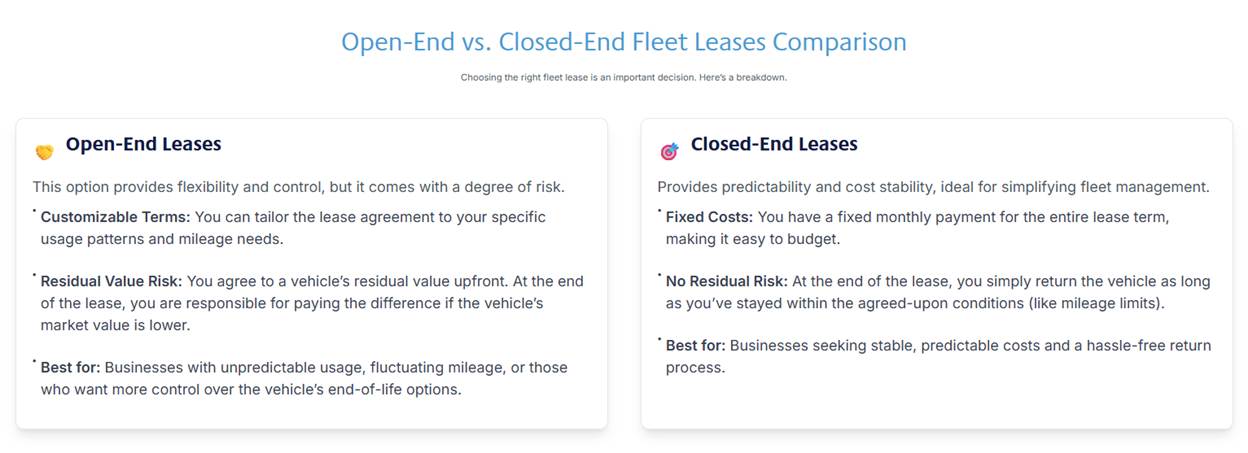
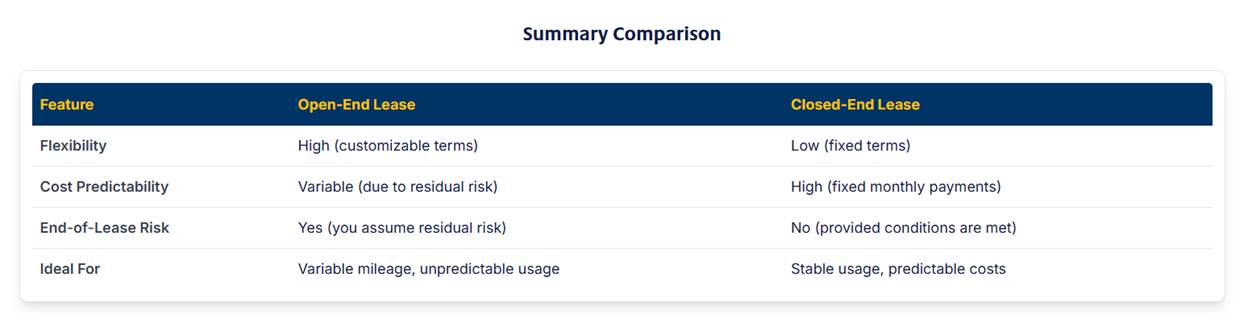
Understanding the various types of fleet leasing is essential for making informed strategic decisions. Businesses primarily choose between open-end and closed-end leases. Each type has distinct features and benefits that cater to different business needs.
Open-end Leases
Open-end leases offer flexibility, allowing businesses to tailor terms to their usage. They include a mutually agreed upon residual value, which means businesses may need to cover the difference if the vehicle’s final value falls short of the residual value or receive a gain on the sale of the vehicle if the value is greater than the residual value. This option suits businesses with variable mileage needs or fluctuating usage patterns.
Closed-end Leases
Closed-end leases, on the other hand, provide more predictability. They involve returning the vehicle at lease end with no obligations, provided the terms are met. This includes conditions like mileage limits and normal wear and tear. This type is ideal for businesses seeking cost stability and minimal end-of-lease responsibilities.
The Role of Fleet Leasing Companies
Fleet leasing companies do more than write the lease. A good provider sources vehicles at fleet pricing, handles titling and registration, provides maintenance and a fuel card program through a service network. Many also remarket each vehicle at the end of its cycle.
Providers differ in the structures they write and the depth of service behind them. Some offer one lease type for every client. Others, like Ewald, tailor the structure to how your vehicles are actually used. For a full walkthrough of what to evaluate, read our guide on how to choose fleet leasing companies.
What You Should Expect from your Fleet Leasing Partner
Reduced Upfront Financial Commitment
Rather than purchasing vehicles outright and tying up significant capital, leasing requires a much smaller initial payment spread into predictable monthly costs, freeing up cash for hiring, equipment, or growth.
Vehicle Maintenance and Repair Programs
Ewald’s maintenance program is powered by Network by Wheels, giving your fleet access to a nationwide service network. Routine maintenance, unexpected repairs, and ongoing upkeep are all managed through the program — meaning less downtime, less admin work, and no surprise bills hitting your budget.
Fuel Card Solutions
A fuel card program gives you real-time visibility and control over fuel spending across your entire fleet. Track costs by driver or vehicle, identify inefficiencies, and reduce waste — so you always know where your fuel dollars are going.
Vehicle Upfitting
Upfitting makes it easy to cycle into newer trucks and vans regularly. When it’s time to move on, they handle vehicle cycling and remarketing for you. That means better fuel efficiency, updated safety features, and a professional fleet without the hassle of selling or disposing of old vehicles yourself.
Access to the Latest Models and Technologies
Leasing lets you cycle into newer trucks and vans regularly, improving fuel efficiency, adding updated safety features, and giving your fleet a better reflection on your business without the hassle of reselling old vehicles.
Is Fleet Leasing Right for Your Business?
We can help you find out. For more information, contact Ewald Fleet Solutions for a free fleet evaluation.